Lake terms, explained plainly
What the numbers on a gauge, a forecast or a dam chart actually mean when you are standing at the ramp.
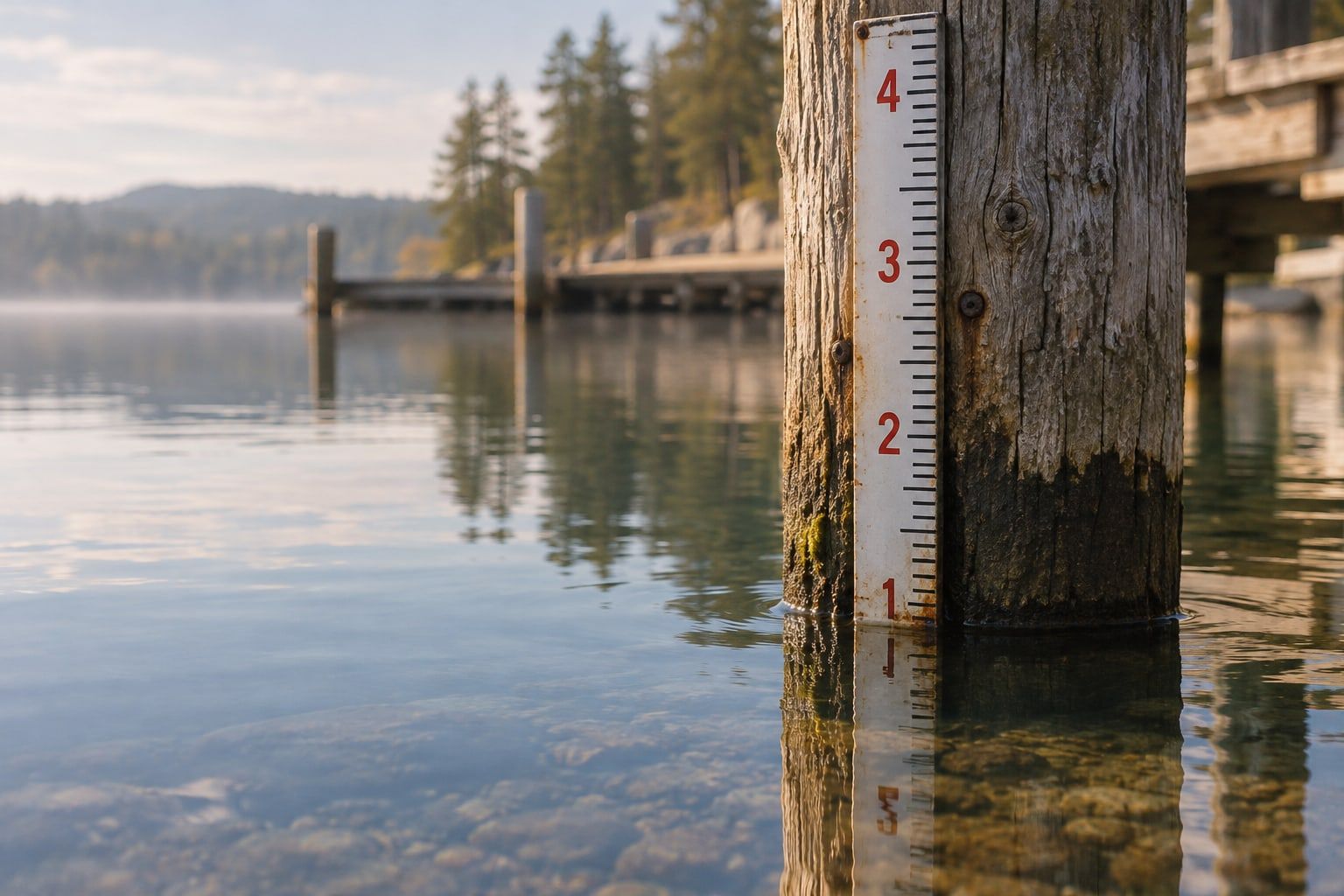
Water level
- DrawdownThe planned lowering of a reservoir below its normal level, usually in fall and winter.
- Flood poolThe reserved space above full pool that a reservoir fills during floods.
- Full poolThe target elevation a reservoir is managed to hold during normal operation.
- Gage heightA water level measured against a local reference point at the gauge, not sea level.
- NGVD29 vs NAVD88The two vertical reference systems used for US lake elevations, and why they differ by a few feet.
- Percent fullHow much water a reservoir holds compared with its capacity at full pool.
- USGS gaugeThe U.S. Geological Survey stations that measure lake levels and water temperature.
Wind and weather
- Beaufort scaleA 0 to 12 scale that links wind speed to what you see on the water.
- FetchThe distance wind blows over open water, which controls how big the waves get.
- Gusts vs sustained windSustained wind is the average; gusts are the short peaks. The gap between them matters.
- Knots, mph and km/hConverting wind speed between knots, miles per hour and kilometers per hour.
- Wind forecast modelsThe computer models behind wind forecasts, and which one Lakeglance uses.
Safety
- Cold water shockThe gasp reflex and fast loss of strength that follow a fall into cold water.
- Offshore windWind blowing from land out over the water, which can push paddlers away from shore.
- Park wind rulesWind limits set by parks, rental operators and clubs that can close a lake to small boats.
- Sailing scoreHow we turn wind, gusts, rain and storms into a go or no-go call for each activity.
- Small craft advisoryNational Weather Service alerts for wind and waves that are hazardous to small boats.